Unfortunately the audio of the week 7 lectures have not been recorded. The slides are available, however, on both MULO and Blackboard. I am very sorry for the inconvenience, but sometimes technology does fail. I know that some of you have clashes and need to rely on the recordings. I would urge, however, those of you who can attend the lectures to do so, because that is the only absolutely guaranteed way that you have of hearing the material
Cheers, Clare
Friday, 20 April 2012
Wednesday, 18 April 2012
Crusades and Crusade Historians
[Edit: spelling of Tyerman corrected - thanks to JJ.]
In lectures during week 7 Clare raised the issue of thinking about where historians are coming from when they write. I'd like us to try and incorporate this into our discussions in this week's virtual tutorial. I've provided some links that give you other people's perspectives on Christopher Tyerman, author of the chapter on the Meaning of the Crusades, and his work. There are reviews of one of his recent books by Jonathan Philips - another well-known historian of the Crusades - and Dame Janet (a.k.a. 'Jinty') Nelson, a prominent early medievalist. I've also given you a link to an interview with Dr Tyerman himself. If you can, I recommend reading through these after you've looked at Tyerman's chapter. Address the questions in the reading pack, but also consider whether Tyerman's view seems to represent a consensus; and how his views differ from or relate to those of others who have written and thought about the Crusades.
The same was true at the time of the very first crusade. As Megan told us a couple of weeks back, pope Urban's sermon was recorded in different versions by a range of observers. Does applying similar principles of interpretation to these reports help you think about how and why they differ? Where were these medieval writers coming from, do you think? Why were they writing? Who was in their assumed audience?
Post your thoughts and responses to these readings below by Monday evening. Then we'll be moving on to St Francis and Co.!
 |
Truce between Christians and Saracens.
Matthew Paris, Chronica Maiora, Parker MS 16II, f.139v.
|
-
- Review of God's War by Jonathan Phillips in The Telegraph, September 2006.
- Review of God's War by J.L. Nelson in the London Review of Books, 2007.
- Interview with Christopher Tyerman about his book God's War.
 |
| Urban II preaching at Clermont |
In this interview, Tyerman talks about how it is misleading and ahistorical to draw direct connections between modern wars in the Middle East and the medieval crusading movement. I agree with him on this point, and it brings me to a general matter I forgot to mention in class, which is: while modern parallels and experiences can be useful tools for helping us think about the past, we should never confuse them with historical argument itself, which always has to be based in the evidence and context of the period. I'm sure you knew this - but especially following our discussions about ANZAC cove and Canterbury it seemed a good time to remind ourselves of this point...
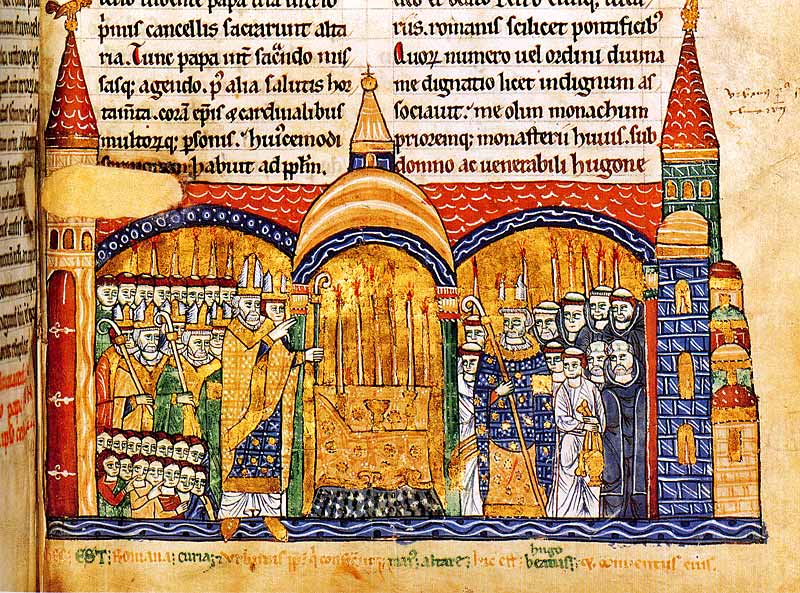 |
| Urban II preaching the crusade |
But back to the Crusades! The Institute for Historical Research in London runs a monthly seminar about the Crusades, so clearly there's no shortage of opinion and debate on the topic.
Post your thoughts and responses to these readings below by Monday evening. Then we'll be moving on to St Francis and Co.!
Wednesday, 11 April 2012
Women's Roles
Stephanie starts us off with a montage of thought-provoking images:
Trishna adds:
 In terms of expectations of women different women assumed
different roles. Peasant women worked in fields and stores, sometimes taking
over stores that were once owned by husbands if they died. Even upper class
women were taught sewing, embroidery, weaving and other needlework.
In terms of expectations of women different women assumed
different roles. Peasant women worked in fields and stores, sometimes taking
over stores that were once owned by husbands if they died. Even upper class
women were taught sewing, embroidery, weaving and other needlework.


 |
|
1. Duccio, Madonna and Child also called
Stoclet Madonna or Stroganoff Madonna, c. 1300
2. Masaccio, The Expulsion, c. 1425 (Adam and Eve being
expelled from Heaven)
3. Unknown, Jeanne d’Arc, c.1450
4. From “The Book of
Margery Kempe”, 1436
5. Lucca, Hildegard, Volmar und
Richardis, Liber Divinorum Operum, c. 1230 (Hildegard receiving a divine
vision)
6.
Gerbert de Montreuil, Le
Roman de la Violette, c.1400 (a medieval brothel)
|
Trishna adds:
From what I’ve gathered from this week’s readings, women’s
roles in the middle ages were not as pivotal in the public eye however they
were crucial to how a family functioned and the lineage of a family. Most women
did not have major roles in society, such as roles involving the church or
leadership of kingdoms; however they had crucial roles in a family’s lineage
and the relations between families and between villages. I found this really
interesting and the fact that women were the ‘agents of alliance’ according to
Le Goff as the act of them being handed over involved a lot of items and funds
from a dowry. The economic process of marriage was very intriguing as there was
a ‘transfer of wealth’ firstly as compensation to the family who were losing a
daughter, and then in exchange between husband and wife. Marriage between men and women was also seen
as a ‘peace pact’ as it created a truce between two families and it was the
woman’s job to maintain the alliance and to maintain lineages. I also found it
interesting that marriage was essentially a social act and was done so to bring
honour to a family. This practice was seen in the nobility as marriages were decided
upon often by the status of a man and women, because once a women got married
she either moved up or down in social standings. I also noticed disparities in
the ages of when women got married, because while women did get married quite
young (at the age of 17 or so) those of the peasantry and working class delayed
the age of marriage while the richer classes had women married by the age of
15. It is clear from these readings that women’s roles and lives revolved
around their families and maintaining relationships, however I wonder how this
worked for monastic women, considering they didn’t have families?
 In terms of expectations of women different women assumed
different roles. Peasant women worked in fields and stores, sometimes taking
over stores that were once owned by husbands if they died. Even upper class
women were taught sewing, embroidery, weaving and other needlework.
In terms of expectations of women different women assumed
different roles. Peasant women worked in fields and stores, sometimes taking
over stores that were once owned by husbands if they died. Even upper class
women were taught sewing, embroidery, weaving and other needlework.
Portrayals of women from the three demographics; Nobility,
Monastic/Religious and Peasantry. All show the three different worlds they came
from. A noble women would be shown in her beautiful gowns surrounded by other
women similarly dressed as seen in the image on the left.
Monastic Women on the other hand would be shown in the image of God almost,
as they would be simply dressed and reverent looking (below left). Lastly, Peasant women would be shown as hard working as they would be working
on a farm (below right).
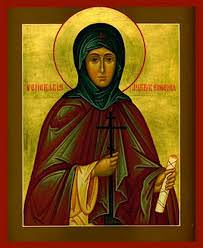

Ironically, none of these images have any reflection of family life nor do
they have any children involved. I could not find any women with children or family
portraits which possibly suggest that while family life was so important and
crucial, it was also a very private affair and once a woman was married any
further business was to remain within the household.
Friday, 6 April 2012
Easter Week
Hi everyone,
I hope you're having a nice break - but not too much of a break, because essays are looming! Use time off lectures and tutorials to get ahead on your research if you can. In the meanwhile, here's some medieval Easter music to pass the time...
The image shows a manuscript called a Gradual,
which is a collection of musical items for the Mass. There are two
musical pieces on the page. The decorated capital R is the beginning of
the introit for Easter Sunday. An introit, as you might guess
from the name, is sung at the beginning of the Mass. This one comes from
Psalm 138, and reads, in Latin:
Resurrexi, et adhuc tecum sum, alleluia. Posuisti super me manum tuam, alleluia. Mirabilis facta est scientia tua, alleluia. Domine probasti me et cognivisti me.
Then, with the large black "h", begins another psalm, no. 118:
Haec dies quam fecit Dominus: exultemus et laetemur in ea
Can you make out any of the words, now that you know what it should say?
See you on Monday week,
Kathleen
I hope you're having a nice break - but not too much of a break, because essays are looming! Use time off lectures and tutorials to get ahead on your research if you can. In the meanwhile, here's some medieval Easter music to pass the time...
 |
| Resurrexi, Music for Easter Sunday, British Library, Crowland Gradual, c.1240. |
Resurrexi, et adhuc tecum sum, alleluia. Posuisti super me manum tuam, alleluia. Mirabilis facta est scientia tua, alleluia. Domine probasti me et cognivisti me.
[I
rose up and am still with thee, alleluia. Thou hast laid thy hand upon
me, alleluia. Thy knowledge is become wonderful to me, alleluia. Lord,
thou hast proved me, and known me]
Listen to a performance of a medieval setting of this psalm by Schola Cantorum hereThen, with the large black "h", begins another psalm, no. 118:
Haec dies quam fecit Dominus: exultemus et laetemur in ea
[This is the day that the Lord made: let us be glad and rejoice in it.]
Listen to a performance of a later (16th century) setting of this psalm by The King's Singers hereCan you make out any of the words, now that you know what it should say?
See you on Monday week,
Kathleen
Tuesday, 3 April 2012
The Passion
The Passion, for those who don't know, is a term for Jesus' crucifixion on Good Friday. In medieval times one of the symbols of this was the pelican. A widespread story, often illustrated in Bestiaries, related how the pelican fed her starving young with her own blood; this was taken as a metaphor of Christ's sacrifice. The Pelican in her Piety, as this story was called, became a common artistic motif in medieval religious architecture, and in encyclopaedic books. The image here shows the Pelican in her Piety
represented in a misericord at St Mary's Abbey, Beverley, in Yorkshire,
a famous example of 14th century English Gothic style. She is pecking
her own breast to release the blood and feed the chicks. (They weren't
shy of graphic images in those days!)
A misericord is a little folding seat in the quire (i.e. choir) area of churches that the monks or canons could lean on during long services. It comes from the Latin for mercy,
because allowing a tired singer to sit down was like taking mercy on
him! In the medieval period the underneath of misericords, like the one
shown here, came to be decorated in marvellous carvings, since this was
the part of the seat most often visible to those moving about the church
between services. Some had religious images, and others had very
surprisingly secular ones, like illustrations from tales of knightly
deeds and the rescue of fair maidens, or images of monsters.
 |
| Pelican in her Piety, St Mary's, Beverley. By awmc1 @ flickr |
Wednesday, 28 March 2012
Comments!
If you are still having trouble commenting on the blog, your browser may be incompatible.
Follow this link to check which browser(s) to use: http://support.google.com/blogger/bin/answer.py?hl=en&answer=42247
Week 6 tutorial blog follows below...
Follow this link to check which browser(s) to use: http://support.google.com/blogger/bin/answer.py?hl=en&answer=42247
Week 6 tutorial blog follows below...

Tuesday, 27 March 2012
Library Tutorial Week
Hi everyone,
A reminder that our week 6 tutorial will take place in the Mattheson library in the ground floor Training Room 1 (a library floor plan is here). It's compulsory to attend this class and complete a worksheet based on what you learn. The aim is to give you the skills you will need to research your essay and reference it properly using the expected footnote style. It's a very important week for setting you up to study history in general as well as specifically to prepare for your essay in this unit. To get ready for next week, first use Monash's Search system to try and identify any book about Charlemagne that was published in the last 10 years and is available in the Mattheson library. Then try to find a journal article about Carolingian law written in the same period. Write down all the publication details you can find for these two items. Try to articulate what strategies you used to find the two items, and any difficulties you encountered. Come prepared with your results and any post any questions or problems that want solving below. In addition...
if this is your first year at Uni: Try to define these terms for yourself:
if none of this is new to you: Think about your experience of researching and writing an essay. What are your top tips for finding relevant books and other sources? What problems have you encountered when referencing essays? What useful feedback from tutors have you gained? Be ready to share your expertise with the rest.
And since there is no required reading, here are some links you might want to peruse to keep you thinking medieval!
A reminder that our week 6 tutorial will take place in the Mattheson library in the ground floor Training Room 1 (a library floor plan is here). It's compulsory to attend this class and complete a worksheet based on what you learn. The aim is to give you the skills you will need to research your essay and reference it properly using the expected footnote style. It's a very important week for setting you up to study history in general as well as specifically to prepare for your essay in this unit. To get ready for next week, first use Monash's Search system to try and identify any book about Charlemagne that was published in the last 10 years and is available in the Mattheson library. Then try to find a journal article about Carolingian law written in the same period. Write down all the publication details you can find for these two items. Try to articulate what strategies you used to find the two items, and any difficulties you encountered. Come prepared with your results and any post any questions or problems that want solving below. In addition...
 |
| Love and Devotion is on at the State Library of Victoria |
- reference
- citation
- primary source
- footnote
- plagiarism
- secondary source
- bibliography
if none of this is new to you: Think about your experience of researching and writing an essay. What are your top tips for finding relevant books and other sources? What problems have you encountered when referencing essays? What useful feedback from tutors have you gained? Be ready to share your expertise with the rest.
~ ~ ~ ~ ~
And since there is no required reading, here are some links you might want to peruse to keep you thinking medieval!
- For those of you fascinated by the difference between the East and West in the medieval period, you might want to look at the exhibition currently showing at the State Library of Victoria, Love and Devotion, which is a lavish display of Persian manuscripts from the 11th century onwards. It looks at Eastern literature on its own terms, and in relationship to contemporary and modern Western society. It's free and it's on until the 1st of July.
- For those interested in the weird and wonderful world of religious relics, you might be interested in this review of Treasures of Heaven, a recent exhibition of reliquaries (i.e. containers for relics) that was held at the British Museum in 2011.
You can watch the official introduction to the Treasures of Heaven exhibition here:
Subscribe to:
Posts (Atom)